Why Efficiency is Killing Your Value: Understanding the Doorman Fallacy
What is the Doorman Fallacy? Learn why spreadsheet-driven efficiency traps are forcing tech companies to rehire, and discover how to protect your invisible value in the age of AI.
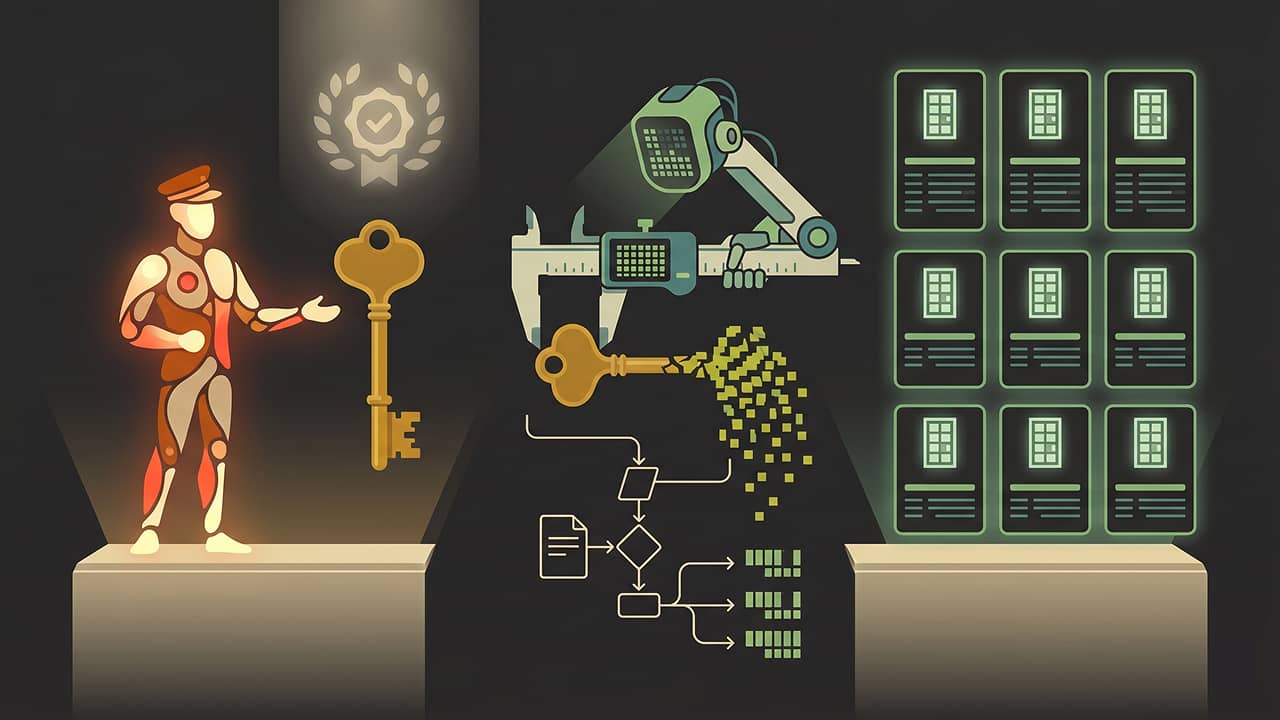
The Trap of the Spreadsheet Perspective
The spreadsheet is perhaps the most dangerous drug in the modern boardroom. It provides a relentless high of perceived certainty, allowing a manager to look at a column of costs and see "waste" where there is actually vital infrastructure.
Consider the recurring line item for a doorman: $30,000 a year to move a piece of wood and brass. From the perspective of a pivot table, this is a glaring inefficiency. A motion sensor costs a few hundred dollars, requires no health insurance, and never takes a smoke break. The logic seems airtight—replace the human with a sensor, and the "saved" capital moves straight to the bottom line.
However, a curious "hangover" is currently hitting the corporate world. Companies that aggressively replaced human experts with AI or slashed "frivolous" perks are now quietly reversing those decisions and rehiring the very people they let go. They are discovering, far too late, that they fell victim to a logical trap identified by behavioral economist Rory Sutherland: The Doorman Fallacy.
This occurs when we mistake a visible task for the total value of a role, leading to cost-cutting measures that inadvertently destroy the very thing they were meant to optimize. We love metrics because they provide an illusion of control in an uncontrollable world, but the spreadsheet only tracks what is easy to count, not what actually matters.
Takeaway 1: The Invisible Value of the "Useless" Task
The classic "Hotel Doorman" example serves as the perfect illustration of this error. If you define a doorman’s job solely as "the mechanical act of opening a door," then an automated system is undeniably superior. But as Sutherland argues, the visible task is often the least valuable part of the role.
"If you understand a doorman simply as a way to open the door, of course you can yield cost-savings by replacing him with an automated system. But if you understand a doorman as a way to elevate the status of the hotel and create a better guest experience—hail taxis, greet guests, carry bags—then you realize the full role of the doorman cannot be replaced with an automated system."
The doorman provides unmeasurable value through status signaling, security, and the psychological comfort of personalized recognition. Humans are prone to this fallacy because we over-prioritize what we can measure (salary) over what we cannot (brand prestige). We trade away the "premium" feel of a brand for a rounding error on a balance sheet, failing to realize that the doorman was the interface for the hotel's entire value proposition.
Takeaway 2: When "Perks" Are Actually Infrastructure
The Doorman Fallacy extends far beyond staffing; it is the primary driver behind the current erosion of corporate culture. When big tech companies face financial pressure, they immediately target benefits like free lunches, bus transportation, or on-site massages. On a balance sheet, these look like "frivolous" expenses.
In reality, these are high-cost signals of a company's "fitness" and commitment to its "tribe." This is Signaling Theory in action: the very fact that the perk is "unnecessary" is what makes it a powerful signal of the company's strength and its dedication to providing an unrivaled employee experience.
When these signals are cut, the "employer brand" suffers a blow that far outweighs the immediate financial savings. These short-term cost savings act as a predatory loan against the company’s future; they create long-term damage to talent retention and recruitment that can take a decade to repair. By removing the signal, you aren't just saving on catering; you are signaling to your best people that the "social contract" has been shredded, triggering a talent drain that eventually costs millions in lost productivity and "legacy toxicity" as the most mobile (and usually most talented) employees exit first.
Takeaway 3: The AI Efficiency Trap—Output is Not Outcome
We are currently seeing the Doorman Fallacy play out in the implementation of Artificial Intelligence, particularly in software development. Executives look at Large Language Models (LLMs) and see a way to replace expensive human experts with "cheaper, more capable" code generators. This is a fundamental misunderstanding of the Social Contract of Engineering. A senior developer is not just a code-writer; they are the "Insurance Policy" for the system.
As the industry reality check begins, the distinction becomes clear:
"AI can generate code incredibly fast, but generating code isn't the same thing as understanding a system. It isn't the same thing as owning the consequences of decisions. It isn't the same thing as knowing why one architecture choice will become a disaster two years from now."
Experienced developers are unimpressed by raw AI output because they know the code is merely the final artifact. The real work is state-management, predicting edge cases, and making trade-offs under uncertainty. Crucially, an AI cannot be fired, sued, or held accountable when a system fails at 3:00 AM.
When you replace a senior architect with an LLM, you are removing the "doorman" of your technical stack—the person who understands the systemic resilience and owns the liability. You might save on the hourly rate of "writing code," but you are accumulating massive technical debt that will eventually come due.
Takeaway 4: Don’t Tear Down Chesterton’s Fence
The Doorman Fallacy is essentially a modern, spreadsheet-driven execution of Chesterton’s Fence. This logical rule states that you should never tear down a fence until you fully understand why it was built in the first place.
If you see a doorman standing at a door or a company offering "unnecessary" bus transportation, those are "fences." They were put there to solve problems—like social cohesion, safety, or elite signaling—that aren't immediately obvious to a newcomer with a calculator. Removing a role or a process without identifying its invisible function is not "lean management"; it is strategic vandalism. It leads to a decline in operational stability that the spreadsheet-wielder will likely blame on "market conditions" rather than their own shortsightedness.
Takeaway 5: The High Cost of the "Wrong Metric"
When companies optimize for a specific task while ignoring the invisible value surrounding that task, the results are predictably disastrous. We have seen this in the "AI Efficiency Trap" where fast food chains rolled out automated ordering only to face public failures, and in tech firms that engaged in "quiet rehiring" after realizing their "lean" teams couldn't actually maintain the systems they built.
To survive this era of automation, we must distinguish between the visible and the invisible:
- Visible Tasks: Opening a door, writing a line of code, answering a ticket, pixel-pushing.
- Invisible Value: Empathy, security, brand prestige, systemic resilience, understanding context, and owning the liability of a decision.
Conclusion: Beyond the Spreadsheet
In an increasingly automated world, the human element is no longer the "inefficient" part of the business; it is the "premium" differentiator. While AI can process tasks and spreadsheets can track costs, neither can capture the signaling value of a greeting or the long-term architectural wisdom of a seasoned engineer.
As you evaluate efficiency in your own organization or career, look past the visible output and identify the "fences" you represent. Ask yourself:
"What is the 'invisible' value you provide that a spreadsheet will never be able to capture?"
If you cannot articulate the value you provide beyond the task, you are just a door waiting for a sensor. But if you are the one providing the security, the status, and the systemic integrity, the spreadsheet will eventually have to realize it can't afford to lose you.